
What HR Leaders Taught Us Over Breakfast in New York
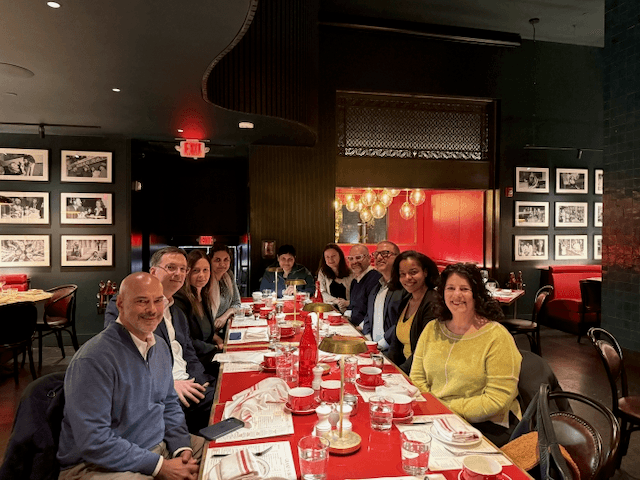
On March 25th, michaelillert hosted a Brew and Business Breakfast in the heart of New York City, bringing together 12 senior leaders from financial services, professional services, technology, and beyond. The conversation was frank, the coffee was good, and two themes dominated the morning.
AI in HR: the gap between ambition and reality
Ask any HR leader whether AI is on their agenda and the answer is yes. Ask how deeply it's embedded in their day-to-day operations and the picture looks very different. Across all 12 attendees, not one could point to an example of AI being truly integrated into HR workflows. Awareness is high. Adoption, so far, has largely remained at the surface.
At michaelillert, we've taken a deliberate approach: building a connected set of AI tools that removes back-office and administrative friction entirely, freeing our team to focus on what only humans can do. But the more important conversation is not just about where to use AI. It's equally about where to draw the line. We've made a clear decision not to use AI to assess or evaluate candidates. That choice sits at the heart of our philosophy: technology removes friction, and people make judgments.
That distinction matters, and it's one we'd encourage every HR team to define explicitly before adoption accelerates.
Employee engagement: a calm surface with pressure underneath
The second topic generated equally candid discussion. Retention figures across the room looked broadly healthy, but the group was clear-eyed about why: the job market is tight, and people are staying because their options are limited. Several attendees had seen this reflected in their own staff surveys, where dissatisfaction runs deeper than the turnover data suggests.
The collective read was sobering. When the market opens up, we may well see a wave of voluntary departures. The question is whether organisations will be ready.
Two things stood out from the discussion. First, HR's role in picking up early signals is more critical than ever, and that requires HR teams to stay close to people, not at arm's length. High-touch matters. Second, the emotional support demands placed on HR, particularly from younger employees, are growing faster than most teams are resourced to handle. Several attendees raised the question of whether professional guidance or counselling offerings should become a standard part of the people strategy, rather than a crisis response.
Until next time
We're grateful to everyone who joined us at Grand Central for such an open and substantive morning. The format works precisely because it creates space for honesty rather than performance. We look forward to the next one.